Florida's 3 Constitutional Amendments on the Nov. 3 Ballot, Explained in Plain English
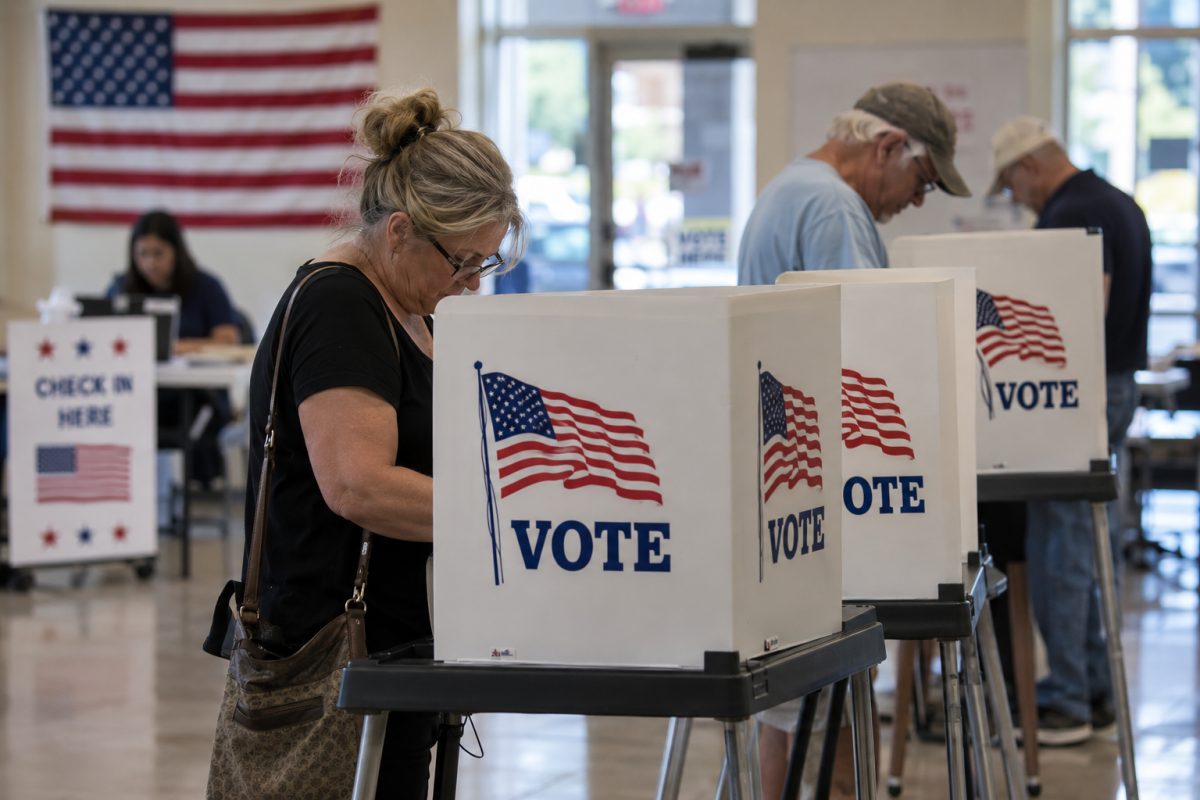
Florida voters will decide on three proposed constitutional amendments and local ballot measures in the November 3, 2026, election
When Jacksonville and St. Augustine voters reach the bottom of their ballots this fall, below the races for governor and U.S. Senate, they'll find three proposed changes to the Florida Constitution. Each asks a simple yes-or-no question, but the official wording is long and hard to follow.
Duval and St. Johns voters will also see one local question each: a school tax in Duval County and a land conservation bond in St. Johns County.
Here's what each one would do, in plain English.
The amendments are listed in ballot order. Your own sample ballot shows exactly how they appear for you: duvalelections.gov in Duval County, votesjc.gov in St. Johns County.
First, the 60% rule
In Florida, a constitutional amendment needs at least 60% of the vote to pass, not just a simple majority. If an amendment gets 59% yes, it fails.
The two local questions are different. They need only a simple majority, more yes votes than no votes, in that county.
Amendment 1: A bigger rainy-day fund for the state
What it does: Raises the limit on Florida's Budget Stabilization Fund, the state's savings account for emergencies, from 10% to 25% of the state's general revenue.
The money part: It also requires the Legislature to move money into the fund each year, either $750 million or whatever amount is needed to reach the 25% limit, whichever is less, unless certain conditions are met.
Getting money out: The amendment allows lawmakers to withdraw money from the fund for "critical state needs."
What it would mean: Florida would save more money during good years, so it has a bigger cushion for hurricanes, recessions or other emergencies. The trade-off is that money set aside in savings each year isn't available for other spending that year.
- A YES vote raises the rainy-day fund limit to 25% and requires yearly deposits.
- A NO vote keeps the current 10% limit.
Amendment 2: No property tax on farm equipment
What it does: Exempts tangible personal property on agricultural land from property taxes. That's things like equipment and machinery, as opposed to the land itself.
Who it covers: The property has to be "habitually located or typically present" on land classified as agricultural. It also has to be used to produce agricultural products or for agritourism, and be owned by the landowner or the person leasing the land.
When it starts: If approved, it first applies to tax years beginning Jan. 1, 2027.
What it would mean: Farmers and ranchers would no longer pay property tax on the equipment they use on their farms. Supporters see it as help for agriculture. It would also reduce the property tax money that equipment brings in for local governments, which is a small share in an urban county like Duval but larger in rural parts of the state.
- A YES vote exempts that farm property from property taxes.
- A NO vote keeps it taxable.
Amendment 3: A much bigger homestead exemption
This is the amendment most likely to affect your tax bill, and it does several things at once.
1. It raises the homestead exemption for city and county taxes
What it does: If you own your home and it's your permanent residence (a "homestead"), the amendment increases how much of its value is exempt from non-school property taxes:
- $150,000 in 2027
- $250,000 in 2028
- Adjusted for inflation after that
What that means: Non-school taxes are the ones that pay for the city, the county and special districts. School taxes are not part of this increase. Homeowners would still pay school taxes on the same value as now.
An example: Say your homestead is assessed at $300,000. Starting in 2028, $250,000 of that value would be exempt from city and county taxes, leaving about $50,000 to be taxed by those governments. That's far more than the current exemption.
2. It lets local governments go even further
The amendment requires the Legislature to set up a way for counties and cities to raise the homestead exemption for their own taxes, up to a home's full assessed value, which would effectively eliminate those taxes on homesteads. Special districts could do the same with voter approval.
3. It limits tax increases on non-homestead property
For property that isn't a homestead, such as rental homes, second homes and business property, the yearly cap on how much the assessed value can rise drops from 10% to 5%.
4. It limits what property taxes can pay for
Counties and cities would have to spend property taxes only on:
- public safety
- education and schools
- infrastructure
- natural resources
- bond debt
- employee retirement benefits
- operations and administration
Other spending would need approval from county officers or city and county governing bodies, unless general law prohibits it.
5. A rule for newcomers
People who are not Florida residents on Dec. 31, 2026, would get the existing homestead exemption when they qualify. They wouldn't get the bigger exemption until their fifth year of having it, to the extent the U.S. Constitution allows.
When it starts: Jan. 1, 2027.
What it would mean: Many homeowners would pay noticeably less in city and county property taxes, and owners of rentals and business property would see slower increases. Local governments would collect less property tax money, which pays for police, fire, parks, roads and other services. They would have to make up the difference, cut spending, or both.
- A YES vote raises the homestead exemption to $150,000, then $250,000, lowers the non-homestead cap to 5% and limits what property taxes can pay for.
- A NO vote keeps the current homestead exemption and the 10% cap.
Jacksonville only: Keep the school district's 1-mill tax?
What it asks: Should the Duval County School District continue its current 1-mill property tax for operating costs, from July 1, 2027, to June 30, 2031?
What a mill is: One mill is $1 of tax for every $1,000 of taxable value, or $100 a year on $100,000 of taxable value.
Where the money goes: The ballot says the money would be:
- shared proportionally with charter schools
- used to pay teachers, school security and support staff
- used to preserve academic programs
- used to protect arts, athletics and student activities
The district must report each year on how the money is spent.
Important: This tax already exists. The question is whether to continue it for four more years, not whether to add a new one.
- "Yes, for continuation" keeps the 1-mill tax through June 2031.
- "No, against continuation" lets it end when the current approval runs out.
St. Augustine and St. Johns County only: $100 million for land conservation
What it asks: Should St. Johns County borrow up to $100 million through general obligation bonds to buy and manage land that:
- protects water quality
- conserves wildlife habitat, natural areas, farms and forests
- provides outdoor recreation
- reduces flooding
How it would be paid for: A property tax of up to 0.15 mills, which is up to $15 a year for every $100,000 of taxable value. Each round of bonds would have to be paid off within 20 years.
Who would run it: The county's existing Land Acquisition and Management Program, created in 2021.
Why it's on the ballot: County commissioners voted Aug. 18 to put it on the ballot. Their resolution points to the county's fast growth and development as the reason to protect land for drinking water, rivers, wetlands, wildlife, farms and recreation.
- A YES vote allows the county to borrow up to $100 million for land conservation, paid for with a tax of up to 0.15 mills.
- A NO vote means no conservation bonds and no new tax for them.
How to vote
Duval County (Jacksonville):
- Early voting: Tuesday, Oct. 20, through Sunday, Nov. 1, at any of 24 sites. Hours change by day. Full list at duvalelections.gov.
- Questions: 904-255-VOTE (904-255-8683)
St. Johns County (St. Augustine):
- Early voting: Wednesday, Oct. 21, through Saturday, Oct. 31, 8 a.m. to 6 p.m. daily, at any of 10 sites. Sites include the Supervisor of Elections Office at 4455 Avenue A, the Solomon Calhoun Community Center and St. Augustine Beach City Hall. Full list at votesjc.gov.
- Questions: 904-823-2238
Both counties:
- Election Day: Tuesday, Nov. 3, 7 a.m. to 7 p.m., at your assigned precinct.
- Mail ballot requests: due by 5 p.m. Thursday, Oct. 22.
- Mail ballot returns: completed ballots must reach your Supervisor of Elections by 7 p.m. Nov. 3. In St. Johns County, mail ballots are not accepted at Election Day polling places.
- Bring: a photo ID with your signature.
Source: Duval County Supervisor of Elections; St. Johns County Supervisor of Elections; St. Johns County Board of County Commissioners

News organizations may republish this story with credit. See our guidelines.
Know someone who'd want to read this? Email it to a friend.
Own a Jacksonville business? Introductory ad rates from $125/month. See ad optionsPlan your weekend with Jax Times
Get This Weekend in Jacksonville every Thursday: the best local events, free things to do and family fun, plus each evening's local news. Free, and you can unsubscribe anytime.
Most read this week
- Early Voting in Jacksonville Starts Tuesday: All 24 Sites, the Hours, What to Bring and What's on Your Ballot
- Jacksonville and St. Augustine High School Football: Where Every Team Stands, and the Games to Watch Friday
- Duval and St. Johns School Calendars 2026-27: Every Day Off Left This School Year, Side by Side
- Rent in Jacksonville and St. Johns County by ZIP Code: From $1,216 to $2,897 a Month
- Florida Is Holding $3 Billion in Unclaimed Money. Here's How Jacksonville and St. Augustine Residents Can Search for Free
More stories
 Local Jacksonville's Bridges by the Numbers: The Blue One, the Green One, the Tall One and the Longest One
 Finance Florida Is Holding $3 Billion in Unclaimed Money. Here's How Jacksonville and St. Augustine Residents Can Search for Free
 Real Estate Rent in Jacksonville and St. Johns County by ZIP Code: From $1,216 to $2,897 a Month
 Education Duval and St. Johns School Calendars 2026-27: Every Day Off Left This School Year, Side by Side
Comments
Be respectful. No personal attacks, hate speech, spam or anyone's private information. Every comment is reviewed before it appears. Comment rules
No comments yet. Be the first to share your thoughts.