The Great Fire of 1901: How a Pile of Spanish Moss Burned Down Jacksonville in 8 Hours, and Built the City We Know
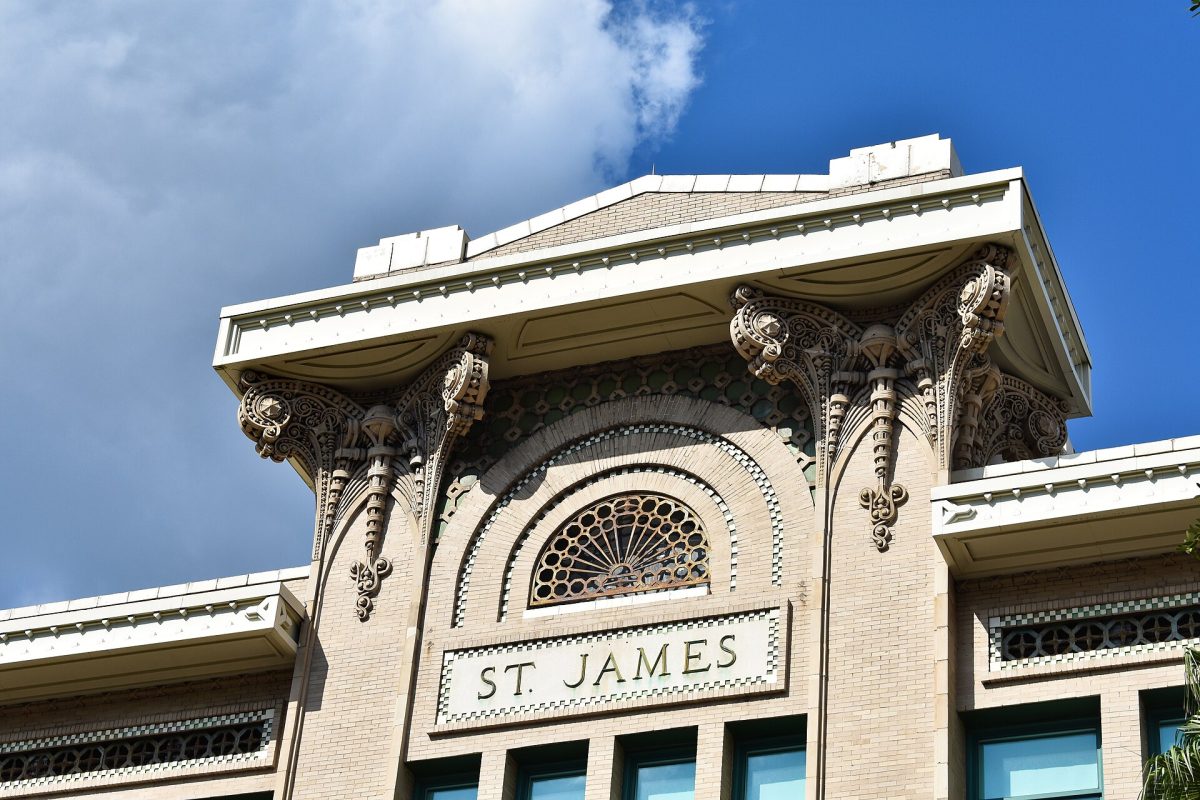
The St. James Building, designed by Henry John Klutho after the Great Fire, is now Jacksonville City Hall. Photo: PicoOrdinalo / Wikimedia Commons (CC BY-SA 4.0)
On May 3, 1901, a spark from a chimney landed on a pile of Spanish moss drying in the sun outside a downtown Jacksonville factory. Eight hours later, the fire it started had burned 146 city blocks, destroyed more than 2,300 buildings and left nearly 10,000 people homeless.
It was one of the worst urban fires in American history, often ranked third, behind only the Great Chicago Fire of 1871 and the fire that followed the 1906 San Francisco earthquake. The glow could be seen in Savannah, Ga., and the smoke reached Raleigh, N.C.
And yet Jacksonville came back fast, and the city that rose from the ashes still shapes downtown today. Here's the story of the Great Fire of 1901, from the moss pile to City Hall.
A dry spring and a pile of moss
Spring 1901 had been dry in Jacksonville. The city had gone through a long drought, and its mostly wooden buildings were primed to burn.
Around noon on Friday, May 3, workers at the Cleaveland Fibre Factory, at the corner of Beaver and Davis streets in what's now the LaVilla area just west of downtown, had laid out Spanish moss to dry. In those days, moss pulled from Florida's oak trees was cleaned, dried and used to stuff mattresses, furniture and upholstery.
Sparks from the chimney of a nearby building, which some accounts describe as a small house, drifted onto the moss. It caught fire.
"Seemingly with the rapidity that a man could walk"
Workers tried to put it out, but a brisk northwest wind pushed the flames from building to building. One account described the fire spreading from house to house "seemingly with the rapidity that a man could walk."
The wind carried the fire east and south, toward the heart of the city and the St. Johns River. Wooden houses, churches, hotels, stores and government buildings went up one after another. Firefighters couldn't get ahead of it.
By the time the fire burned itself out that night, it had swept through 146 city blocks in about eight hours.
The toll
| Date | Friday, May 3, 1901 |
| Started | About noon, Cleaveland Fibre Factory (Beaver and Davis streets) |
| Burned | About 8 hours |
| City blocks destroyed | 146 |
| Buildings destroyed | More than 2,300 (often given as 2,368) |
| People left homeless | Nearly 10,000 |
| Deaths reported | 7 |
| Seen from | The glow from Savannah, Ga.; smoke as far as Raleigh, N.C. |
What's remarkable is how few people died. For a fire that destroyed most of a city's business district in a single afternoon, only seven deaths were reported.
The records that burned
The fire didn't just destroy buildings. It also destroyed the real estate records stored at the Duval County Courthouse, a loss that left a permanent gap in the county's property records. Researchers tracing Jacksonville land ownership back before 1901 still run into it today.
Martial law
With much of the city in ruins and thousands of people suddenly homeless, Gov. William S. Jennings declared martial law and sent in state militia units to keep order. The city was returned to civil authority on May 17, two weeks after the fire.
The architect who read about it in the newspaper
In New York, a young architect named Henry John Klutho read about the fire in The New York Times. Klutho, born in 1873 in Breese, Ill., finished the projects he was working on and moved to Jacksonville to help rebuild.
His first big commission came quickly: the Dyal-Upchurch Building, completed in 1902. Then, on a business trip to New York in 1905, Klutho met Frank Lloyd Wright, a meeting that, by Klutho's own account, changed his life. Klutho began designing in Wright's Prairie School style, with its strong horizontal lines, wide overhanging roofs and geometric ornament.
Over the next decade, Klutho and other architects filled downtown with new buildings, and Jacksonville ended up with one of the largest collections of Prairie School architecture outside the Midwest, where the style was born.
Klutho's buildings you can still see
| Building | Built | Today |
|---|---|---|
| Dyal-Upchurch Building | 1902 | Still stands downtown; Klutho's first major Jacksonville commission |
| Morocco Temple | 1910 | Still stands downtown |
| St. James Building | Dedicated Oct. 21, 1912 | Jacksonville City Hall |
| Bisbee Building, Florida Life Building | Between 1907 and World War I | Still stand downtown |
The St. James Building, which began as a department store, was the largest building in Jacksonville when it was dedicated on Oct. 21, 1912. Today it's City Hall, and it still has the 75-foot octagonal glass dome that served as a skylight over the store.
Klutho lived to 91 and died in Jacksonville in 1964. He had little money in his later years, despite having designed so much of the city's skyline.
What came next: the Winter Film Capital of the World
The rebuilt city didn't stay quiet. In 1908, just seven years after the fire, Kalem Studios opened the first permanent movie studio in Jacksonville. Over the next decade, more than 30 silent film companies set up shop here, including Metro Pictures (which became part of MGM), Edison Studios and Gaumont, and Jacksonville earned the nickname "Winter Film Capital of the World," years before Hollywood took over.
How the Great Fire compares
The 1901 fire is often called the third-largest urban fire in U.S. history:
- The Great Chicago Fire (1871)
- The 1906 San Francisco earthquake and fire
- The Great Fire of 1901 in Jacksonville
Rankings vary depending on whether you measure by area, buildings or damage. But by any measure, it remains the largest disaster in Jacksonville's history.
From ashes to a new skyline: a timeline
| Date | What happened |
|---|---|
| May 3, 1901, about noon | Sparks ignite Spanish moss drying at the Cleaveland Fibre Factory |
| May 3, afternoon | A northwest wind drives the fire east and south through downtown |
| May 3, night | The fire burns out after about 8 hours and 146 blocks |
| Days after | Gov. William S. Jennings declares martial law and sends state militia |
| May 17, 1901 | Jacksonville returns to civil authority |
| 1901 | Architect Henry John Klutho moves from New York to help rebuild |
| 1902 | Klutho's Dyal-Upchurch Building is completed |
| 1905 | Klutho meets Frank Lloyd Wright and turns to the Prairie School style |
| 1908 | Kalem Studios opens Jacksonville's first permanent movie studio |
| 1910 | The Morocco Temple is built |
| Oct. 21, 1912 | The St. James Building, today's City Hall, is dedicated |
Quick answers: the Great Fire of 1901
When was the Great Fire of Jacksonville?
Friday, May 3, 1901. It started around noon and burned for about eight hours.
How did the Great Fire start?
Sparks from a nearby chimney landed on Spanish moss drying outside the Cleaveland Fibre Factory, at Beaver and Davis streets, and a strong northwest wind spread the flames.
How much of Jacksonville burned?
146 city blocks and more than 2,300 buildings, including most of the downtown business district.
How many people died in the Great Fire of 1901?
Seven deaths were reported. Nearly 10,000 people lost their homes.
Was it the biggest fire in U.S. history?
No, but it's often ranked the third-largest urban fire in U.S. history, after Chicago in 1871 and San Francisco in 1906.
Who rebuilt Jacksonville after the fire?
Many architects and builders, but the best known is Henry John Klutho, who moved from New York after reading about the fire and designed some of downtown's landmark buildings, including the St. James Building, now City Hall.
Can you still see buildings from the rebuilding?
Yes. City Hall, the Morocco Temple, the Dyal-Upchurch Building and several buildings along Laura and Forsyth streets date from the decade after the fire.
Why it still matters
It made downtown what it is. Most of the oldest buildings in downtown Jacksonville date from just after 1901, because nearly everything before it burned. When you walk past City Hall or the Laura Street buildings, you're looking at a city rebuilt in a hurry by architects betting on Jacksonville's future.
It's why property research here is tricky. The lost courthouse records still matter to title researchers and genealogists.
It changed how cities thought about fire. Like Chicago's fire 30 years earlier, Jacksonville's showed how quickly a city of wooden buildings could be lost in dry, windy weather, a lesson behind the stronger building and fire codes cities adopted in the decades that followed.
See it for yourself: a self-guided walk
You can see the city the fire made in an easy downtown walk:
- City Hall (the St. James Building), 117 W. Duval St., facing James Weldon Johnson Park. Look up at the Prairie-style details and the dome.
- The Morocco Temple, on Newnan Street, one of Klutho's most unusual designs, with Egyptian-style details.
- The Dyal-Upchurch Building, on Bay Street at Main, Klutho's first big project after the fire.
- The Laura Street and Forsyth Street corridors, where several of the buildings put up in the rebuilding years still stand.
The fire started a few blocks west of today's downtown core, in LaVilla, one of Jacksonville's historic Black neighborhoods.
Did your family live in Jacksonville in 1901? Tell us in the comments if you have stories or photos passed down about the Great Fire or the rebuilding.
Source: Wikipedia: Great Fire of 1901; History of Jacksonville, Florida; Henry John Klutho
News organizations may republish this story with credit. See our guidelines.
Know someone who'd want to read this? Email it to a friend.
Own a Jacksonville business? Introductory ad rates from $125/month. See ad optionsPlan your weekend with Jax Times
Get This Weekend in Jacksonville every Thursday: the best local events, free things to do and family fun, plus each evening's local news. Free, and you can unsubscribe anytime.
Most read this week
- Florida's 3 Constitutional Amendments on the Nov. 3 Ballot, Explained in Plain English
- Duval and St. Johns School Calendars 2026-27: Every Day Off Left This School Year, Side by Side
- Florida Is Holding $3 Billion in Unclaimed Money. Here's How Jacksonville and St. Augustine Residents Can Search for Free
- Early Voting in Jacksonville Starts Tuesday: All 24 Sites, the Hours, What to Bring and What's on Your Ballot
- Rent in Jacksonville and St. Johns County by ZIP Code: From $1,216 to $2,897 a Month
More stories
 Local Jacksonville and St. Augustine State Parks: 10 Questions About $3–$8 Admission, Annual Passes and Savings
 Local JAXPORT by the Numbers: Jacksonville Port's Last 5 Years Ranked, From 9.96 Million to 10.35 Million Tons
 Local St. Augustine's 2 Spanish Stone Forts: 1672 Groundbreaking, a 1742 Watchtower and the Sieges That Shaped Florida
 Local Jacksonville Is Overdue for Its First 50-Degree Night: 35 Years of Data on When the Cold Arrives
Comments
Be respectful. No personal attacks, hate speech, spam or anyone's private information. Every comment is reviewed before it appears. Comment rules
No comments yet. Be the first to share your thoughts.